
How Three Reflections Become One Baseline aNORMALy Score (0–100)
We combine three structured reflection components into a transparent 0–100 score that complements routine clinical care and annual health checkups.
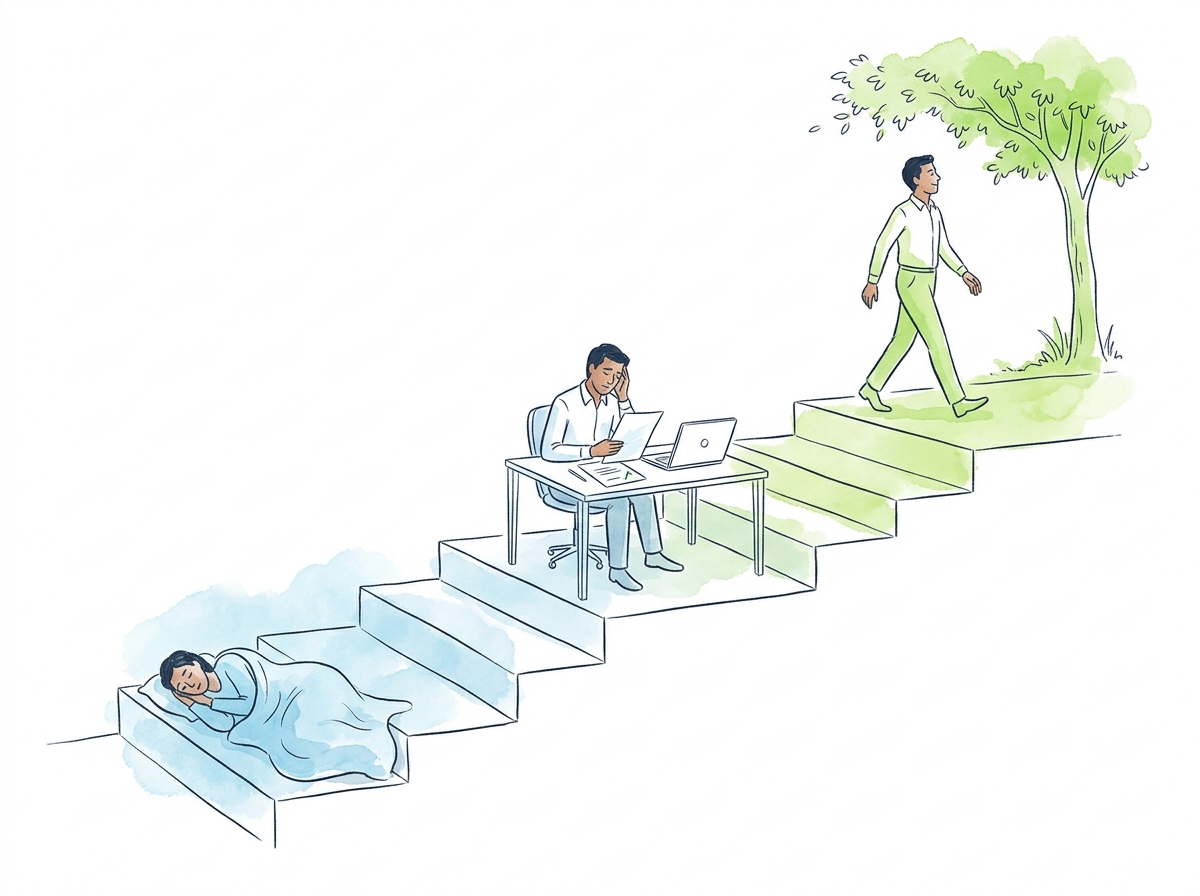
Health Spectrum (6 Stages)
“Where do I stand today?” — Maps daily energy, digestion, and sleep across 6 stages from illness to Positively Healthy.

Wheel of Life (7 Areas)
“Why am I here?” — Identifies which of the 7 everyday life circles (food, work, family, emotions, community, finances, purpose) are straining health.
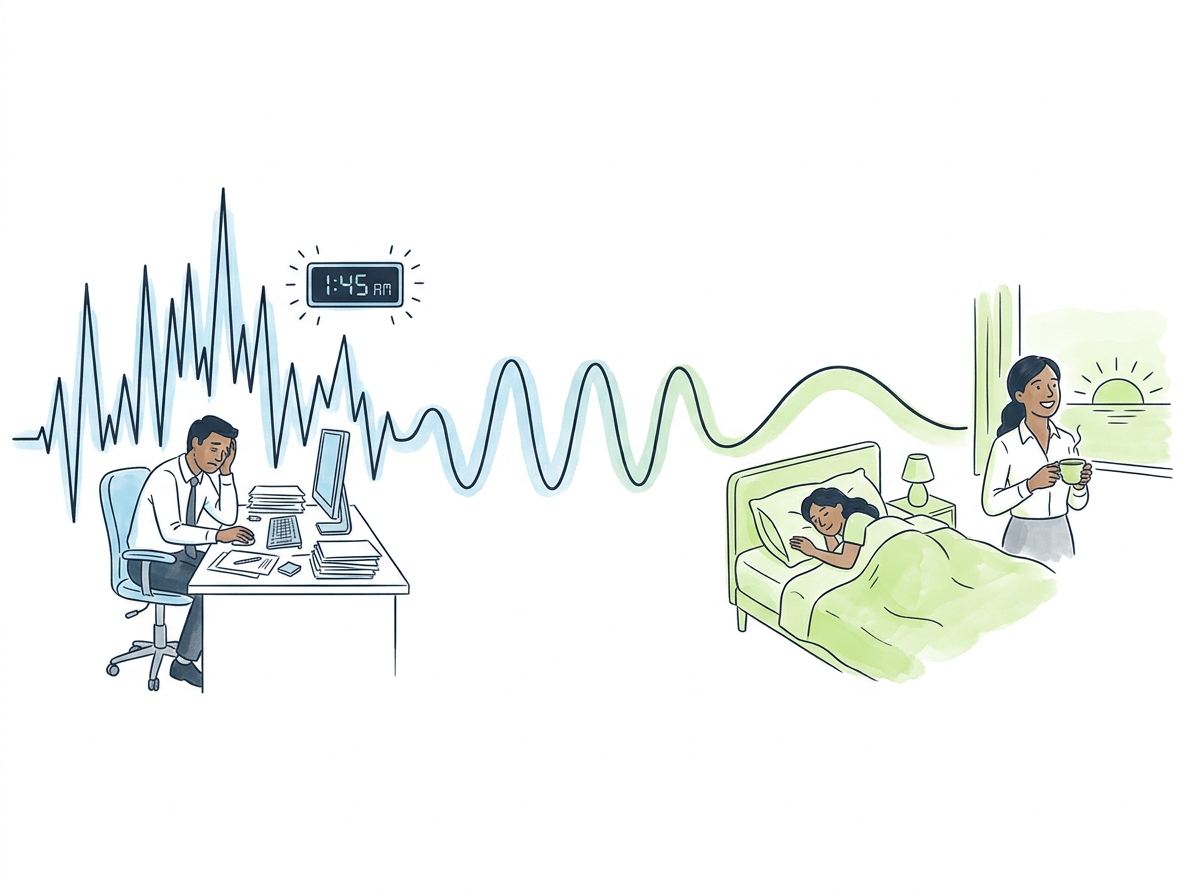
NEVI Stress & Recovery
“How rested is my nervous system?” — Reflects overnight sleep repair and autonomic recovery from daily pressure.
Reproductive, Hormonal, Cycle & Microvascular Vitality (Women & Men)
Evaluates female menstrual cycle phases, PCOS, fertility readiness, and perimenopause/menopause comfort alongside male 24-hour circadian testosterone and microvascular endothelial health—strictly anonymized and protected by the N ≥ 10 privacy lock in cohort reporting.
6-System Everyday Symptom & Chrono-Metabolic Burden
Maps the everyday physical signals behind “Normal” lab reports across 6 physiological systems: (1) Energy, Sleep & Nervous System, (2) Gut & Digestion, (3) Head, ENT & Sensory (sinus, migraine, tinnitus), (4) Metabolic & Weight, (5) Musculoskeletal, and (6) Hormonal/RASA.
Clinical Boundaries & Physician Note — Non-Diagnostic, Practice-Informed FrameworkComplements annual lab checks and treating doctors; never replaces medical diagnosis.
“The aNORMALy Baseline Score is a non-diagnostic, practice-validated preventive health reflection framework—not a medical diagnostic device or randomized clinical trial endpoint. It was forged over 22 years of clinical medicine and institutional fieldwork by Dr. Suresh Kumar Vunnamatla, refined across thousands of real-world participants who loved its clarity and dignity, and designed to be customizable to any workforce or community population.”
“As a clinician who has served across hospital ICUs, uniformed academies, manufacturing plants, and corporate workplaces for over 20 years, I designed this baseline to listen to the everyday human signals that appear long before a lab test crosses a disease threshold—while always respecting the role of your treating physician.” — Dr. Suresh Kumar Vunnamatla (MBBS)
Test How the 3 Lenses Calculate the Score Across Workforce Types
Baseline aNORMALy Score
Routine lab reports often read 'Normal', yet unrefreshed mornings, afternoon energy dips, or 'wired-but-tired' stress load are quietly compounding.
Primary driver is Neuro-Endocrine & Autonomic Stress Load in the NEVI Score (48/100): sympathetic overdrive ('wired yet tired'), delayed evening switch-off, or blunted overnight nervous-system recovery is driving physiological friction. The example suggests that recovery and stress support may be useful areas for further discussion.
Scoring Parameters, Public-Health Context & Longitudinal Care
Default Formula: 40% Health Spectrum + 30% Wheel of Life + 30% NEVI Score — alongside the public-health frameworks that informed the topics covered by the reflection.
1. Inspect All 20 Parameters Across the Three Pillars6 Health Spectrum parameters + 7 Wheel of Life dimensions + 7 NEVI stress & sleep recovery parameters.
| # | Pillar | Parameter | What It Listens To | Contextual Reference |
|---|---|---|---|---|
| 1 | Pillar 1 · Health Spectrum | Daily Energy & Post-Meal Glycemic Stability | Mid-afternoon somnolence (2–4 PM slump), post-lunch brain fog, and urgent cravings for tea, coffee, or sweet snacks. | ICMR-INDIAB Thin-Fat Phenotype & ICMR-NIN 2024 Meal Composition Guidelines |
| 2 | Pillar 1 · Health Spectrum | Circadian Sleep Restoration | Sleep onset latency, 2–3 AM nocturnal waking, and whether morning waking feels naturally restorative without immediate caffeine. | WHO Psychosocial Recovery & NIH Circadian Biology Standards |
| 3 | Pillar 1 · Health Spectrum | Digestive & Mucosal Comfort | Post-meal abdominal heaviness, bloating, gastroesophageal reflux/acidity, bowel transit regularity, and routine antacid reliance. | ICMR-NIN 2024 Gut Microbiome & Culinary Oil/Fiber Guidelines |
| 4 | Pillar 1 · Health Spectrum | Physical Stamina & Sedentary Density | Unbroken sitting hours across the workday, breathlessness on stairs, postural stiffness, and purposeful weekly movement. | WHO Global Guidelines on Physical Activity and Sedentary Behaviour |
| 5 | Pillar 1 · Health Spectrum | Lab Trajectory vs. Lived Experience | Whether annual lab reports are stamped 'Normal' while the individual experiences unexplained fatigue, central weight gain, or reduced vitality—or whether borderline markers (fasting glucose, triglycerides, fatty liver, BP) have begun appearing. | MoHFW NPCDCS Non-Communicable Disease Early Screening Continuum |
| 6 | Pillar 1 · Health Spectrum | Medication & Symptom Dependency | Reliance on daily maintenance prescriptions (antihypertensives, oral hypoglycemics, statins, thyroid support) or frequent over-the-counter painkillers, antacids, and sleep aids. | ALSM Clinical Staging & Safe Physician-Guided De-escalation Principles |
| 7 | Pillar 2 · Wheel of Life | Physical Health & Daily Living | Regularity of home-cooked meals, hydration habits, morning sunlight exposure, and restorative domestic routines. | NHS Health and Wellbeing Framework (Personal Health & Lifestyle) |
| 8 | Pillar 2 · Wheel of Life | Work, Education & Purpose | Workload sustainability, role clarity, boundary protection, and sense of meaningful contribution during working hours. | WHO Healthy Workplace Model (Psychosocial Work Environment) |
| 9 | Pillar 2 · Wheel of Life | Relationships & Family | Warmth and emotional safety at home, unhurried time with spouse/children, and elder-care or family health responsibilities. | NHS Workforce Wellbeing Framework (Relationships & Domestic Support) |
| 10 | Pillar 2 · Wheel of Life | Psychological & Emotional Balance | Capacity to process daily setbacks with equanimity, freedom from persistent anxiety, and room for emotional rest. | WHO 1948 Biopsychosocial Definition of Health |
| 11 | Pillar 2 · Wheel of Life | Social Belonging | Sense of collegial support at work, trusted friendships, and freedom from urban or occupational isolation. | WHO Social Determinants of Health & NHS Community Domain |
| 12 | Pillar 2 · Wheel of Life | Financial Wellbeing | Calmness regarding family obligations, medical contingencies, and freedom from chronic financial survival anxiety. | NHS Health and Wellbeing Framework (Financial Wellbeing Domain) |
| 13 | Pillar 2 · Wheel of Life | Meaning, Values & Fulfilment | Living in harmony with personal ethics, gratitude, spiritual or philosophical grounding, and joy beyond daily tasks. | Whole-Person Biopsychosocial-Spiritual Care Model |
| 14 | Pillar 3 · NEVI Score | Evening Mental Switch-Off Capacity | Ability to mentally detach from work emails, targets, and decision loops within 60 minutes of ending the workday. | NIH Allostatic Load (McEwen & Stellar, 1993) — Failure to Habituate/Shut Off |
| 15 | Pillar 3 · NEVI Score | Sympathetic Overdrive ('Wired yet Tired') | Feeling physically drained by late afternoon yet experiencing a racing mind or restless alertness at bedtime. | NIH HPA-Axis Dysregulation & Vunnamatla NEVI Clinical Framework |
| 16 | Pillar 3 · NEVI Score | Circadian Light & Late Screen Exposure | High-intensity blue-light screen exposure after 9:30 PM combined with insufficient natural morning daylight. | NIH Circadian Photobiology & ICMR Workplace Ergonomic Guidance |
| 17 | Pillar 3 · NEVI Score | Emotional Reactivity Under Pressure | Uncharacteristic irritability, impatience with colleagues or family, or feeling overwhelmed by routine schedule changes. | NIH Allostatic Overload & Occupational Psychophysiology |
| 18 | Pillar 3 · NEVI Score | Somatic Stress Signals | Recurring neck/shoulder tightness, nocturnal jaw clenching, tension headaches, stress-triggered acidity, or palpitations. | NIH Psychosomatic Medicine & Vunnamatla NEVI Clinical Framework |
| 19 | Pillar 3 · NEVI Score | Restorative Breathing & Parasympathetic Tone | Habitual shallow chest breathing or sighing during desk work vs. calm, unhurried diaphragmatic breathing and resting pulse steadiness. | Autonomic Vagal Tone & Integrative Lifestyle Medicine Standards |
| 20 | Pillar 3 · NEVI Score | Next-Day Recovery Velocity After High-Demand Days | How quickly energy, mood, and focus bounce back after a demanding project sprint, night shift, or travel week. | NIH Allostatic Resilience & WHO Workplace Burnout Prevention |
2. Public-Health Frameworks & Contextual Sources (WHO, NIH, NHS & ICMR-NIN)Public-health frameworks that informed the topics covered by the reflection.
Public-health frameworks that informed the topics covered by the reflection. These references are presented as contextual sources and do not imply that WHO, NIH, NHS, ICMR-NIN or MoHFW have validated or endorsed the proprietary score, weights or stage classifications.
Establishes that true health is 'complete physical, mental and social well-being and not merely the absence of disease or infirmity,' integrating physical work environment, psychosocial environment, personal health resources, and family/community involvement.
Demonstrates how chronic unrecovered psychosocial stress ('allostatic load') dysregulates the hypothalamic-pituitary-adrenal (HPA) axis and autonomic nervous system, driving visceral adiposity, insulin resistance, and endothelial inflammation before overt clinical disease.
Structures workforce wellbeing across 7 interconnected domains—Personal Health, Relationships, Fulfilment at Work, Environment, Managers & Leaders, Data Insights, and Financial/Emotional Security—emphasizing upstream listening before intervention.
Documents that South Asian / Indian populations exhibit higher visceral adiposity, earlier hepatic insulin resistance, and postprandial glycemic spikes at lower BMI thresholds ('Thin-Fat Phenotype') than Western cohorts.
3. Longitudinal Deep Study & Complete Ecosystem Support (holisticnutrition.works)How our clinical nutritionists and lifestyle educators support participants over time alongside their physician.
When an organization or individual chooses further support over time, cohorts are supported by dietitians, nutrition professionals and lifestyle educators via holisticnutrition.works across four comprehensive modules:
Culturally grounded evaluation of home kitchen meals, meal timing windows, and tea/coffee patterns.
Tracking recurring acidity, bloating, migraines, stiffness, and sleep latency.
Compiling longitudinal lab history and family tendencies into a Pocket Health Atlas.
Documenting prescriptions, antacids, and supplements to work safely beside the treating physician.